
Principals and Partners

Rick Luettich
University of North Carolina
Lead Principal Investigator
Dr. Rick Luettich is the leader of the APS™ development and operations team and the lead Principal Investigator at the DHS Coastal Resilience Center of Excellence, as well as the Director of the Institute of Marine Sciences at the University of North Carolina at Chapel Hill. He is the co-developer of the ADCIRC model.

Brian Blanton
RENCI (UNC-Chapel Hill)
Dr. Brian Blanton is Director of Earth Data Science at the Renaissance Computing Institute (RENCI), based at the university of North Carolina at Chapel Hill. Read more about his work on the RENCI website.

Dr. Shintaro Bunya
University of North Carolina at Chapel Hill
As a Research Scientist at the UNC Center for Natural Hazards Resilience, Dr. Bunya focuses on advancing the scientific understanding of coastal hazards. His research centers on the physics of hurricane-induced storm surges and compound flooding, utilizing high-fidelity numerical models to simulate and predict the impacts of extreme weather events on coastal regions. Read his full bio here.


Casey Dietrich
North Carolina State University
Dr. Casey Dietrich is an Assistant Professor in the Department of Civil, Construction, and Environmental Engineering at North Carolina State University. Read more about his work on the NCSU website.

Matthew Bilskie
University of Georgia
Dr. Matthew Bilskie is an Assistant Professor with the University of Georgia. Read more about his work on the University of Georgia website.

Clint Dawson
University of Texas at Austin
Dr. Clint Dawson is a professor and head of the Computational Hydraulics Group at the University of Texas at Austin’s Aerospace Engineering and Engineering Mechanics. Read his bio on the UT website.
THE MODEL
ADCIRC
ADCIRC is a system of computer programs for solving time dependent, free surface circulation and transport problems in two and three dimensions. These programs utilize the finite element method in space allowing the use of highly flexible, unstructured grids.
VISUALIZATION TOOLS
CERA
The Coastal Emergency Risks Assessment (CERA) mapping tool visualizes ADCIRC outputs onto a Google Maps-based interface to provide storm surge, wind field and other hazard guidance via a publicly accessible web portal.
THE CENTER
Coastal Resilience Center
Funded by the Department of Homeland Security’s Science & Technology Directorate, Office of University Programs, the Coastal Resilience Center of Excellence is a consortium of research and education projects focused on protecting lives and property in coastal communities.
OUR TEAM
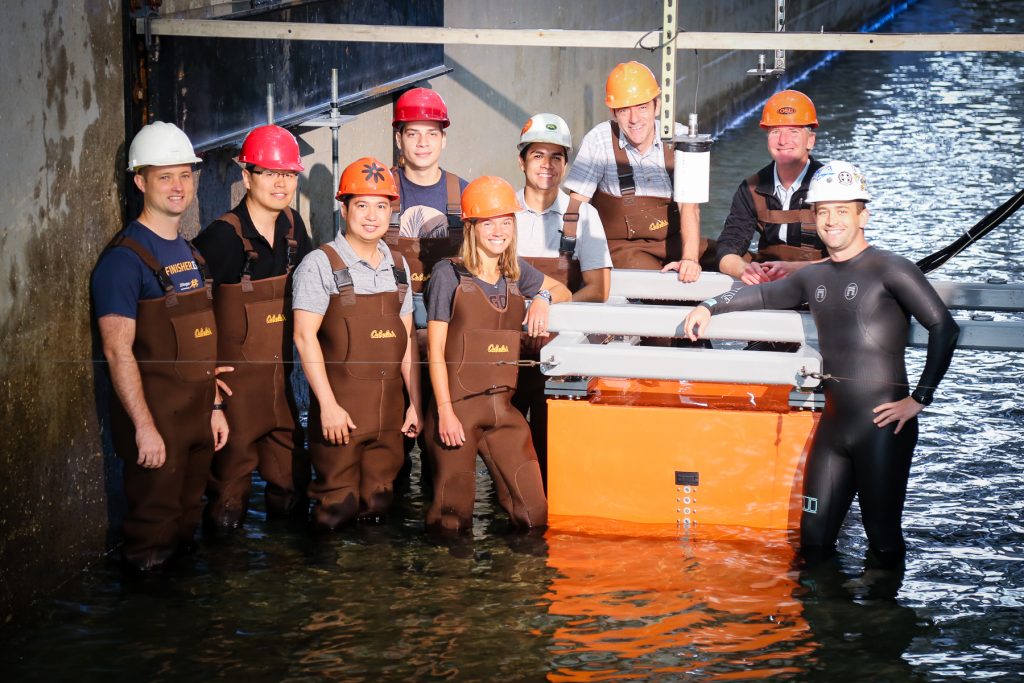
Research partners across the nation.